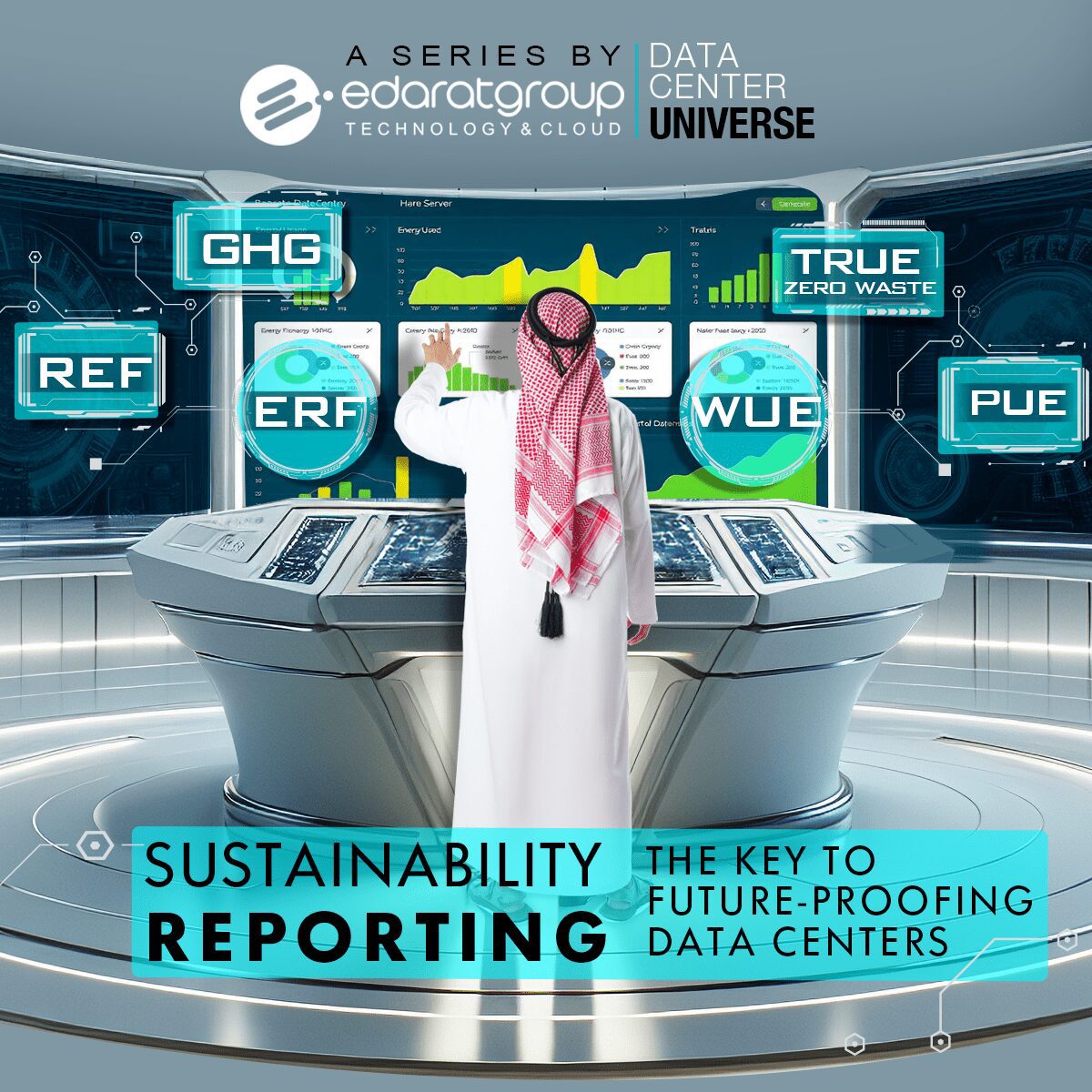
Sustainability Reporting

DeGaulle Outayek

Head of Facility Management Unit

Edarat Group

 
Overview

With climate change increasingly impacting health, safety, and global economies, data center sustainability has become a critical focus for investors, customers, regulators, and environmental advocates.

🌍Increasing Pressure
Data center owners are experiencing increasing pressure due to climate change and the induction of new sustainability regulations in the last decade.

⚡Call to Action
Owners and operators must implement effective programs for continuous improvement.

Europe is leading the charge in net-zero initiatives, with the European Union (EU) committed to achieving net-zero emissions by 2050, and the Climate Neutral Data Center Pact (CNDCP) aiming for climate neutrality in data centers by 2030. The EU’s Corporate Sustainability Reporting Directive (CSRD) will introduce stringent reporting and carbon reduction requirements that businesses must adhere to.

The Science Based Targets Initiative (SBTi), a collaboration between CDP, the United Nations Global Compact (UNGC), the World Resources Institute (WRI), and the World Wide Fund for Nature (WWF), provides a rigorous framework for setting climate targets. Only a few organizations meet its demanding standards, which surpass those of the CNDCP and CSRD, demonstrating a higher level of commitment to sustainability.

Sustainability reporting has become crucial for organizations to effectively communicate their Environmental, Social, and Governance (ESG) impacts. It gives stakeholders valuable insights into a company’s sustainability commitments and progress. However, traditional reporting methods are often labor-intensive, prone to errors, and lacking real-time data.

In light of these challenges, the demand for accurate and efficient sustainability reporting has never been more urgent. Automation is emerging as a critical solution, helping organizations streamline the reporting process, enhance data accuracy, and drive meaningful environmental change.

In this article, we will explore the challenges, requirements, and key performance indicators (KPIs) for sustainability reporting and strategies to simplify and automate the process.


Transforming Data Centers for a Sustainable Future

🛠️ Challenges

Data center operators must handle rapid growth while reducing energy use and shifting to sustainable energy sources. These goals are not mutually exclusive. Operators can take immediate, non-disruptive steps to adopt green energy while planning for long-term sustainable infrastructure changes.

Historically, sustainability has not been a top priority. Uptime Institute’s annual 2021 Global Data Center Survey found that only one-third of data center managers monitor their carbon impact.

In addition, the UI Intelligence Data Report, April 2023—Sustainability, identified reducing facility carbon emissions as one of the top challenges organizations face in meeting their sustainability goals.

Sustainable technology is progressing quickly, enabling new data centers to achieve net-zero and zero-emission standards. Hyperscalers are leading the way, with Microsoft aiming to eliminate all greenhouse gas emissions by 2030, Amazon Web Services targeting 100% renewable energy by 2025, and Google working to be carbon-free by 2030.

Operators of older data centers can earn positive recognition by promptly adopting sustainable energy practices.

 
DATA CENTER UNIVERSE
(6th Publication):
ACC: Best Choice for Hot Climate


Exploring Sustainable Energy Solutions for Data Centers

☀️ Solar

Solar energy offers low operating costs for data centers after initial setup, but there are disadvantages. Solar panels require a large number of cells to power even a small data center, and installation costs may not be worth the investment. They only generate power when the sun is out, making them more suitable for warm areas than snowy ones.

To operate continuously, data centers would need significant battery storage, which is still developing. A 2019 Vertiv survey found that data center operators expected solar to provide 13% of their power by 2025. Until battery technology improves, solar energy alone is unlikely to be cost-effective.

🌬️ Wind

Technology is advancing rapidly, with average capacity levels increasing by 40% in recent years, primarily due to the deployment of larger turbines. Concurrently, the overall costs of wind projects have decreased by around 40%.

The plentiful supply of wind, especially in offshore locations, positions it as one of the most promising alternative energy sources. The Global Wind Energy Council (GWEC) has projected that wind energy could meet 20% of the world’s electricity demand by 2030.

🌋 Geothermal

Geothermal energy, sourced from hot water deep beneath the Earth, is renewable, consistent, compact, and widely available. It’s considered the cheapest renewable energy source and can also be used for cooling.

However, the U.S. Department of Energy (DOE) estimates that only about 0.7% of geothermal electricity resources have been utilized in the U.S., making it the least-used renewable energy source. Despite this, projections suggest geothermal energy could rise to around 50,000 gigawatts by 2050.

For data center operators, it may be wise to let hyperscalers explore this technology without making immediate commitments.

🌾 Biomass

Biomass was the largest source of energy consumption until the mid-1800s, primarily through the burning of wood. It converts organic materials into energy through various processes, including burning, thermochemical, chemical, or biological processes.

While biomass can help divert certain types of waste from landfills, sourcing suitable materials can be costly, and it requires significant storage space for organic materials outside the growing season. Due to these factors, biomass is unlikely to become a major alternative energy source for data centers in the near future.

💧 Hydropower

The benefits of hydropower include its low cost, cleanliness, and reliability. It can provide a stable power supply to complement intermittent sources like wind and solar, and the output can be adjusted by releasing more water from reservoirs.

However, hydropower isn’t without drawbacks. The dams needed for turbines can disrupt local ecosystems, and the high upfront construction costs make it impractical for individual data center owners.

⚛️ Nuclear

Small Modular Reactors (SMRs) are emerging as a reliable energy solution for hyperscalers and AI data centers. SMRs provide consistent and large-scale energy output with a small footprint and low carbon emissions.

While there are challenges related to radioactive waste management and public safety perception, nuclear energy plays a significant role in a low-carbon energy future.

🟢 Green Hydrogen and Fuel Cells

Green hydrogen and fuel cells represent a promising future for achieving a sustainable energy solution. Green Hydrogen is produced through electrolysis of water using renewable sources of power (like hydro, wind or solar) resulting in Hydrogen gas without carbon emission.

Fuel Cells on the other hand are devices that convert chemical energy from hydrogen directly into electricity without emitting any greenhouse gases. Typically, a Fuel cell consists of an anode, cathode, and an electrolyte. As the protons move through the electrolyte to the cathode, while electrons flow through an external circuit, electricity is generated.

Although hydrogen has a very high energy content, approximately 33.33 kWh/Kg, yet the actual usable energy conversion will depend on the efficiency of the electrolysis, fuel cells, and the operating conditions. The two most popular systems are Proton Exchange Membrane (PEMs) with around 40-60% efficiency and Solid Oxide Fuel Cells in the range of 60-80% particularly when combined with heat and power (CHP) applications.

🔋 Batteries

Batteries are becoming viable alternatives to diesel generators for backup power, thanks to two significant developments. First, the cost of grid-scale battery farms has dropped dramatically, with the U.S. Energy Information Administration (EIA) reporting a 72% decrease in project costs from 2015 to 2019. By the end of 2019, there were 163 large-scale battery storage systems in the U.S., totaling 1,688 megawatt-hours, a 28% increase from the previous year.

Battery storage is now seen as a practical option for short-term power needs. However, concerns remain about their effectiveness during long-term outages. The EIA anticipates that future battery projects will be increasingly integrated with utility power plants.

In the short term, batteries are best used to complement existing uninterruptible power supplies (UPS) rather than replace them. This approach allows operators to shift towards cleaner energy while maintaining a reliable backup system.




Exploring Pathways to Renewable Energy

Power Purchase Agreements (PPA), Renewable Energy Certificates (REC), and Science-Based Targets Initiatives (SBTI) are key components in promoting renewable energy and sustainability.

⚡ Power Purchase Agreements (PPA)

Are contracts between energy buyers and producers, ensuring long-term energy supply at agreed prices. This helps stabilize costs and support renewable projects.

🌱 Renewable Energy Certificates (REC)

Represent the environmental benefits of generating one megawatt-hour of renewable energy. They allow businesses to track and claim their use of renewable sources. However, they can raise concerns about greenwashing since they do not generate new green energy but incentivize others to produce it. A more effective approach is using “bundled RECs,” which are directly linked to financing new projects. Once a project is completed, the operator transfers the resulting RECs to the buyer, allowing them to associate their investment with actual green energy output.

🌐 Science-Based Targets Initiatives (SBTI)

provide a framework for companies to set greenhouse gas emission reduction targets aligned with climate science, encouraging accountability and transparency in corporate sustainability efforts.

Together, these tools help organizations transition to cleaner energy sources and contribute to global sustainability goals.

 
DATA CENTER UNIVERSE
(5th Publication):
Data Center Liquid Cooling is Here


Recommendations and Guidance

The European Commission (EC) is actively tackling challenges related to the Energy Efficiency Directive (EED) through a study focused on data center sustainability, completed in late 2023. This study includes three key reports:

Task A Report Proposes a standardized reporting scheme for data centers to enhance sustainability and compliance, requiring mandatory disclosure of specific metrics like energy use and carbon emissions. It stresses alignment with existing EU regulations and highlights the need for stakeholder involvement. Challenges include data availability and measurement complexities, with recommendations for pilot programs and ongoing evaluations.

Task B ReportAnalyzes energy efficiency in European data centers, highlighting their high energy consumption. It introduces metrics like Power Usage Effectiveness (PUE) and advocates for best practices such as optimizing cooling systems and using renewable energy. The report suggests financial incentives for energy reduction and emphasizes industry stakeholders’ collaboration.

Task C Report Assesses the environmental impact of data centers and proposes strategies for mitigation, including lifecycle assessments and measures to achieve net-zero emissions by 2050. Key recommendations involve adopting renewable energy, improving energy efficiency, and effective waste management. The report calls for a comprehensive reporting framework and further research into emerging technologies to enhance sustainability.

Together, these reports aim to establish a robust framework for improving the sustainability of data centers in alignment with EU goals.

🌿 Greenhouse Gas (GHG) Scopes

The classification of GHG emissions into Scope 1, Scope 2, and Scope 3 was established by the Greenhouse Gas Protocol, a partnership between the World Resources Institute (WRI) and the World Business Council for Sustainable Development (WBCSD). This framework helps organizations measure and report their GHG emissions systematically:

1️⃣ Scope 1 Direct emissions from owned or controlled sources, such as fuel combustion in company vehicles and facilities.

2️⃣ Scope 2 Indirect emissions from the generation of purchased electricity, steam, heating, and cooling consumed by the organization.

3️⃣ Scope 3 Indirect emissions from the value chain, including all other emissions not covered in Scope 1 and 2, such as those from suppliers, product use, and end-of-life disposal.

Understanding these scopes is key for organizations aiming to reduce their overall emissions and improve sustainability practices.

 
Watch Now: Discover the power of Edarat Group’s DC Engineering Services


Data Center Sustainability Metrics

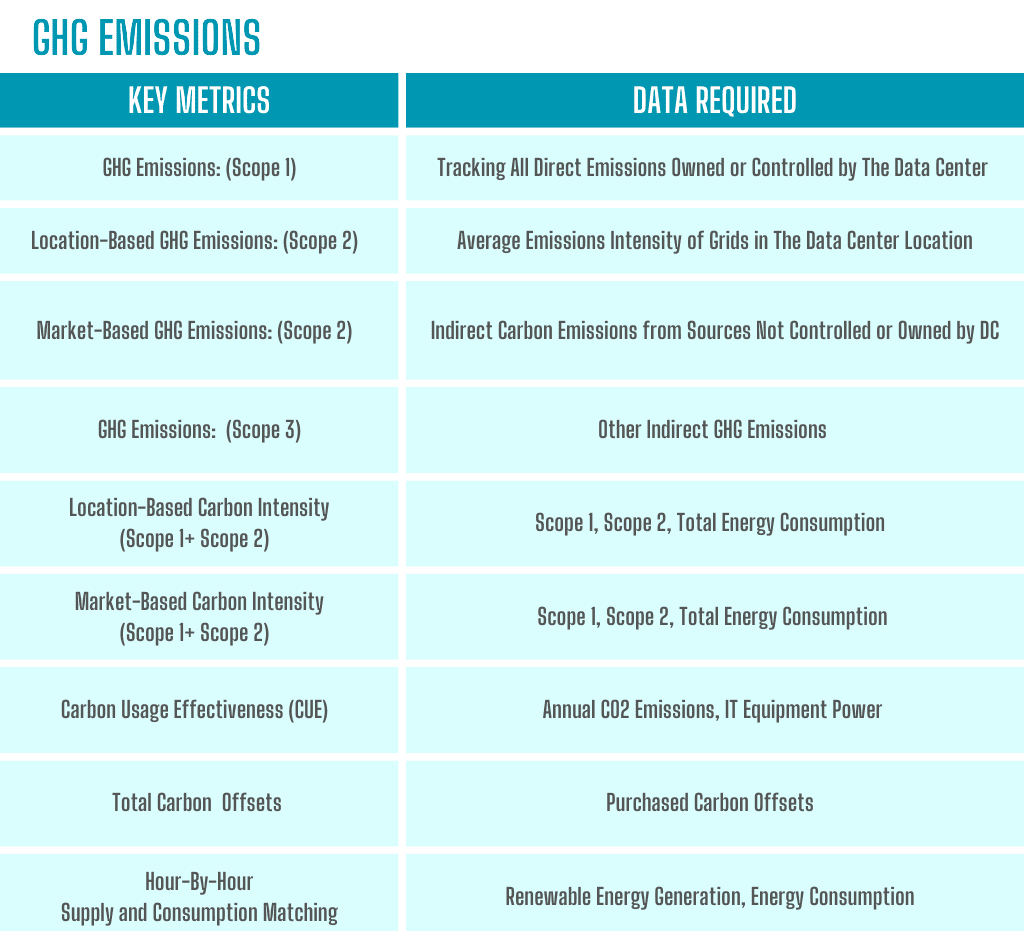
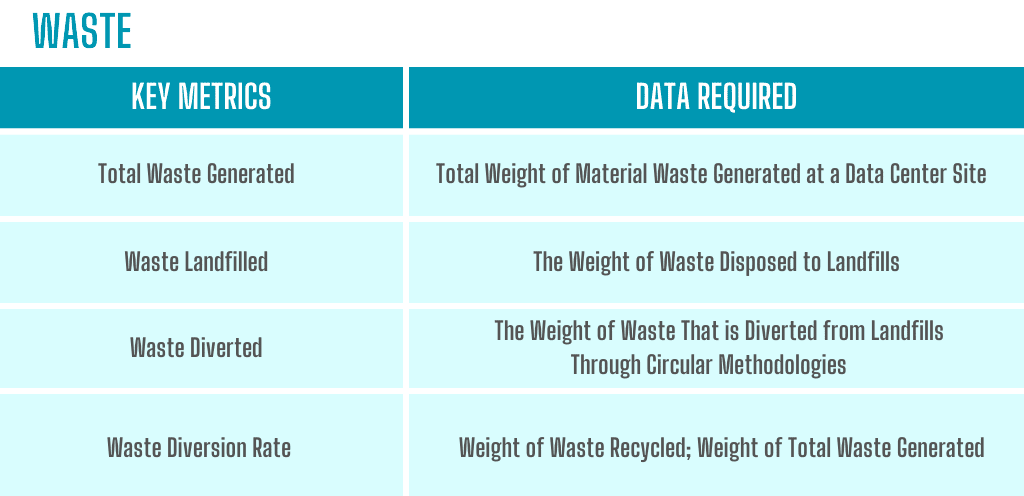
To effectively report on sustainability, data center owners and operators need a standard set of metrics. Without benchmarking, they face several challenges. Inconsistent metrics make it difficult to compare sustainability performance. Additionally, lacking proper metrics hinders organizations from identifying areas for improvement, setting priorities, and tracking progress over time.

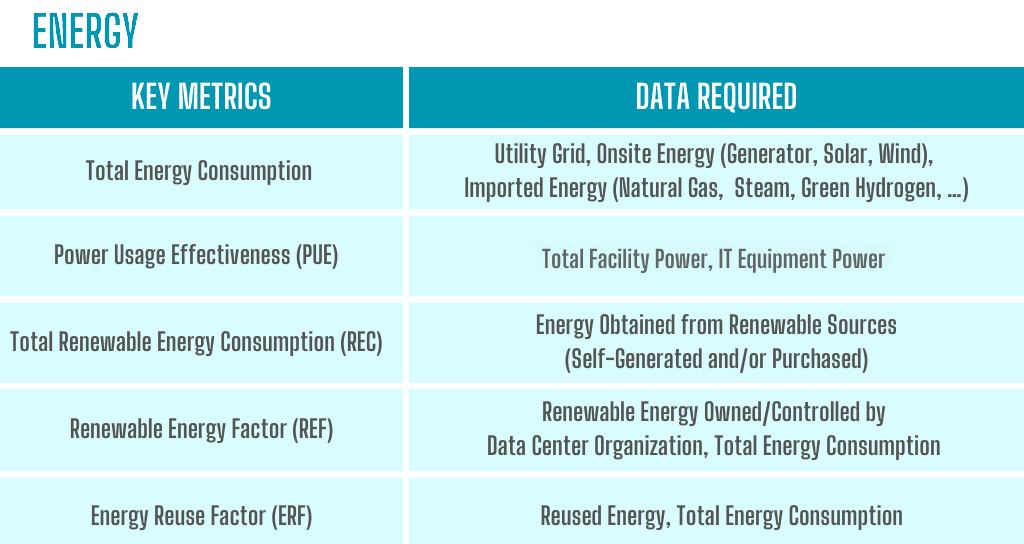
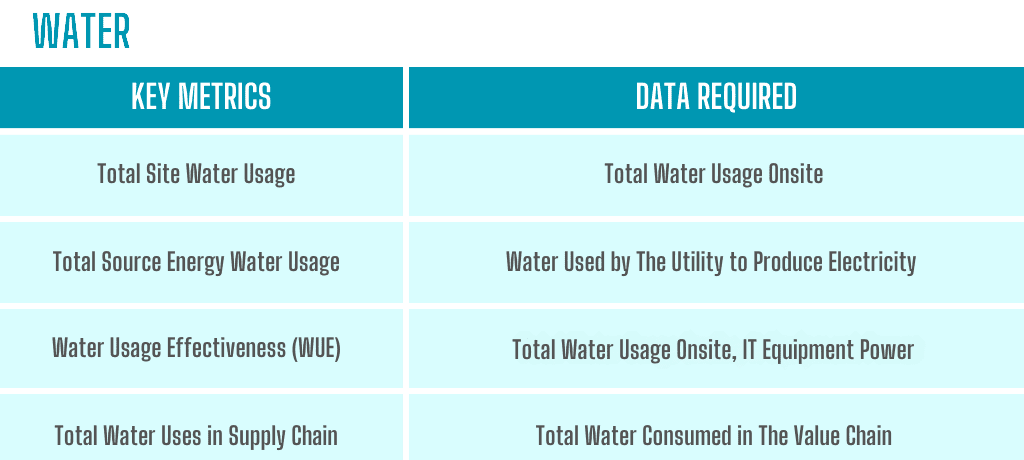
Aligned with the World Business Council for Sustainable Development (WBCSD) in the journey towards net zero, Schneider Electric has identified 23 sustainability metrics that apply to data centers across five metric categories summarized as follows:

📈 Example areas of opportunities

  • Specify VFD control for pumps, fans, and compressors.
  • Design for expanded temperature and relative humidity range.
  • Digitally monitor cooling systems to quickly detect performance degradation (e.g., filter changes, etc.).
  • Automate computer room air handler (CRAH/FAW Wall) units to ensure no demand fighting.
  • Use power monitoring software tools to maintain efficient operations.
  • Operate UPSs in eco mode.
  • Use digital monitoring to support condition-based maintenance & keep equipment running at optimal efficiency.
  • Increase utilization of servers.
  • Decommission underutilized IT.

📈 Example areas of opportunities

  • Design to maximize free cooling, including using high supply air and chilled water temperatures.
  • Use dry coolers or adiabatic coolers over cooling towers to reduce water use.
  • Maintain high-chilled water temperatures.
  • Track water use daily, trend data, and compare seasonal averages to identify abnormal usage.

📈 Example areas of opportunities for Scope 1 & Scope2 

  • Transition to electric fleet vehicles.
  • Maximize energy efficiency across operations.
  • Establish a strategy to procure renewable energy.
  • Operate buildings according to Green Building/LEED Standards.

📈 Example areas of opportunities:

  • Choose more durable products, with a longer life.
  • Choose products which can be reused or recycled easily.
  • Divert shipment/packing materials from landfills.
  • Establish recycling, remanufacturing, or resource recovery pathways for equipment at end-of-life with suppliers.
  • Extend the life of products and systems via regular maintenance and upgrades to reduce scrapping.
  • Recycle only as a last resort after maximizing the opportunity to extend life, reuse, or refurbish (through certified partners).

📈 Example areas of opportunities:

  • Design using LEED, BREEAM, or other sustainable building standards.
  • Ensure proper stormwater management is included in project design.
  • Select and design the project site to minimize the impact of construction on land, including from temporary roads, heavy traffic on existing roads, and temporary buildings to support the construction project.
  • Minimize and properly manage hazardous waste. Avoid single-use plastics to protect marine ecosystems.
  • Use best management practices (including NFPA code) for the management of diesel fuel tanks to prevent and mitigate spills.


The Role of Automation in Sustainability Reporting

📊 Data Collection and Integration

Automation tools can collect data from various sources, including sensors, meters, ERP systems, and supply chain partners. This integration ensures a comprehensive view of sustainability metrics, from energy usage to waste generation.

🕒 Real-Time Monitoring

Automated systems can monitor key performance indicators (KPIs) in real-time, allowing organizations to respond swiftly to emerging issues and adjust their strategies accordingly. This dynamic approach fosters continuous improvement rather than periodic assessments.

✅ Enhanced Accuracy

Manual data entry is prone to errors. Automation minimizes these risks by ensuring consistent data collection and processing, leading to more reliable reports. This accuracy is essential for building trust with stakeholders.

⚙️ Streamlined Reporting Processes

Automated reporting tools can generate reports based on predefined templates, saving time and reducing the workload for sustainability teams. These tools can also adapt to different reporting frameworks (e.g., GRI, SASB, TCFD), making compliance easier.

📈 Improved Stakeholder Engagement

By leveraging automation, companies can provide stakeholders with interactive dashboards and real-time updates on sustainability performance. This transparency fosters greater trust and engagement.

 
DATA CENTER UNIVERSE
(4th Publication):
Is your Data Center AI-Ready?


Conclusion

A data center or co-location provider that fails to prioritize sustainability and reliable availability risks going out of business quickly. The path to sustainability is becoming increasingly defined, driven by global technological innovations. Data center owners and operators must actively engage in this journey and take immediate action to optimize sustainability, all while avoiding greenwashing.

📋 Key Steps for Enhancing Sustainability:

✔️
Set Goals and Objectives
Establish clear goals demonstrating a sustainability commitment.
📊
Select Metrics
Choose metrics that align with these goals to measure progress effectively.
📏
Adopt Frameworks and Standards
Implement appropriate frameworks and standards to ensure compliance and best practices.
🔄
Translate into Action
Integrate sustainability considerations into every stage, from design and construction to ongoing operations.
⚙️
Monitor and Optimize Through Automation
Prepare the infrastructure during construction with the necessary network protocols and sensors/meters. This will facilitate automated monitoring during operations, ensuring continuous optimization.

By following these steps, data centers can enhance their sustainability efforts and remain competitive in an evolving market.

Final Thoughts

As sustainability evolves, automation becomes essential for improving reporting practices. By exploiting these technologies, organizations can enhance their sustainability efforts, increase transparency for stakeholders, and contribute to a more sustainable future. Automation is now a necessity for businesses committed to responsible growth and environmental care.

As a regional leader in data center engineering services, encompassing design, construction, and operations, Edarat Group is proactively adapting new technologies and embracing initiatives in collaboration with local partners and global industry leaders. This commitment aligns with the Kingdom’s Vision 2030, and international standards and regulations, ensuring the development of greener and more sustainable data centers.

 
DATA CENTER UNIVERSE
(3rd Publication):
Study: Data Center Cost/MW 

Share this post

DeGaulle Outayek

Head of Facility Management Unit

DeGaulle has over 20 years of experience in mission-critical environments, specializing in the management of electrical and mechanical systems. He ensures operational excellence across multiple data centers, with expertise in safety standards and innovation-driven practices. His leadership supports Edarat’s commitment to sustainability and efficiency.

Stay ahead

Is Your Data Center Site Truly Sustainable?

Sustainability isn’t just a buzzword; it’s about balancing environmental, social, and economic needs. At Edarat Group, we design smarter, greener data centers that harness solutions like rainwater harvesting to cut water waste and boost efficiency.